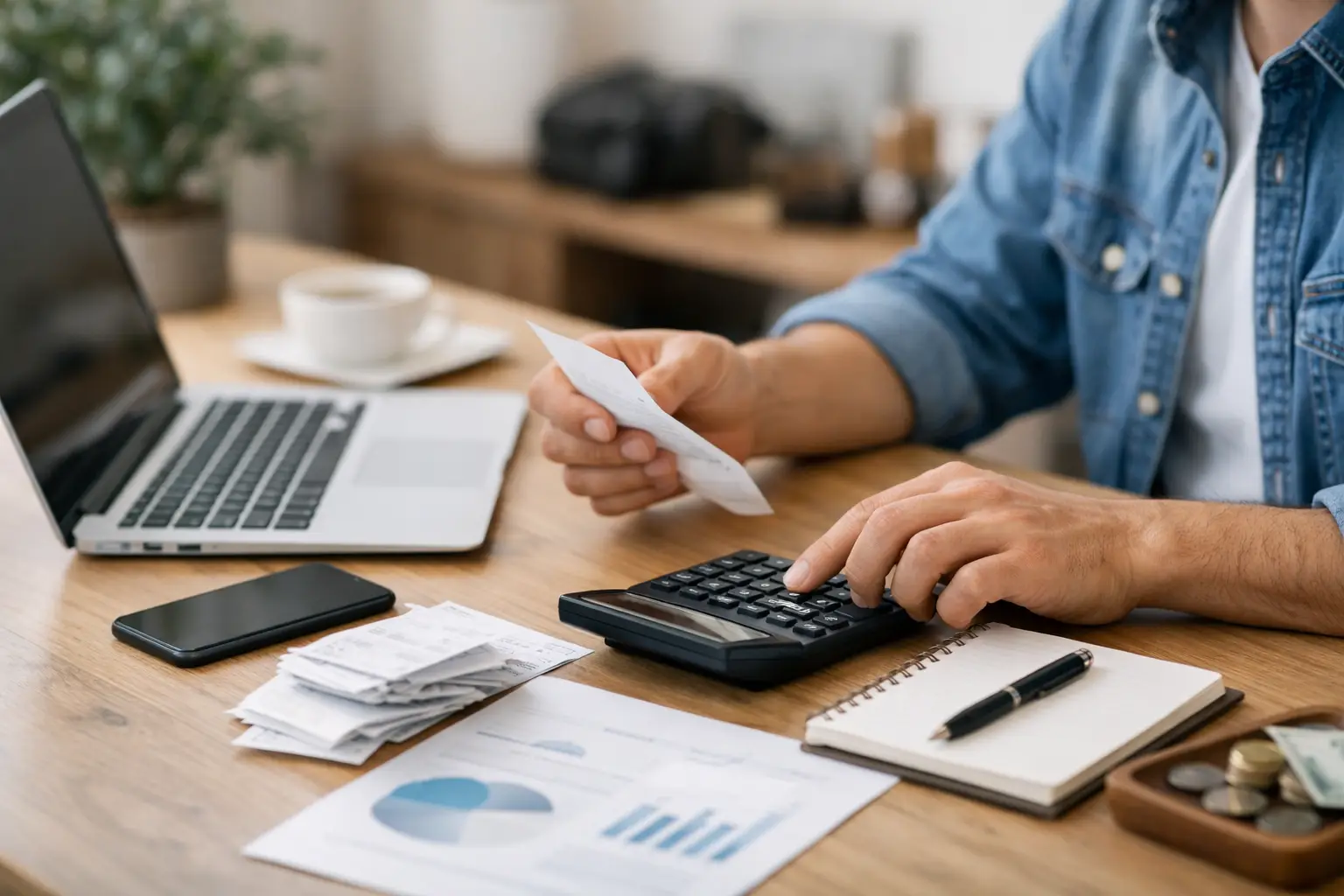
A receipt in your glovebox, a mobile bill with both business and personal use, and a few late-night purchases for the job can quickly turn tax time into guesswork. The practical answer to what can sole traders claim is that you can generally claim costs incurred in earning your business income, provided you can show the connection and keep suitable records.
That sounds simple, but the detail matters. A valid deduction is not just something that helps your business. It needs to be genuinely business-related, not private, and supported by invoices, receipts, bank records or a reasonable calculation method where applicable.
What can sole traders claim as business deductions?
Most sole traders can claim the ordinary costs of running their business. If you are a tradie buying materials, an NDIS provider paying for business software, or a consultant working from a home office, the expense must help you earn assessable income.
Common deductible expenses include:
- stock, materials and consumables used in the business
- tools, equipment and work-related repairs
- accounting software, subscriptions, website hosting and payment processing fees
- bookkeeping, tax agent and legal fees connected to the business
- business insurance, licences, registrations and professional memberships
- advertising, signage, printing and other marketing costs
- business mobile, internet and software costs
- rent for business premises, utilities and cleaning
- wages and superannuation paid to eligible employees.
The key word is business. If an expense has a mixed purpose, such as your mobile plan or home internet, only the business portion can be claimed. Claiming the full amount because you occasionally answer client calls on your mobile is not a sound approach.
Expenses paid personally can still be business costs
Sole traders often use a personal card or bank account to pay for business items, especially when starting out. The payment method does not determine whether an expense is deductible. What matters is the purpose of the purchase and the quality of the record.
It is still better to keep business transactions separate. A dedicated bank account and well-organised Xero file make it far easier to identify claims, reconcile transactions and see what the business is actually spending.
Vehicle expenses: claim the business use, not the whole car
Vehicle claims are an area where records matter most. You can generally claim the cost of using a car for business travel, such as travelling between jobs, visiting clients, collecting supplies or attending business meetings.
Travel from home to a regular workplace is usually private, even if you are carrying tools. The position can differ where your home is genuinely your base of business and the travel is directly connected to earning income, but this needs to be assessed against your circumstances.
There are two common ways to calculate car expenses for eligible vehicles: the cents per kilometre method and the logbook method. The cents per kilometre method is simpler and has a yearly kilometre limit. The logbook method may produce a better result where business use is high, but it requires a valid logbook and records of actual vehicle costs.
If you use a ute, van or other vehicle that is not treated as a car for tax purposes, different rules can apply. Do not assume a work vehicle is automatically 100 per cent deductible. Private trips still need to be considered.
Home office and working-from-home costs
Many sole traders run at least part of their business from home. You may be able to claim the business portion of running expenses, including electricity, internet, mobile costs and office supplies.
There are different methods available for calculating working-from-home expenses. The right method depends on your work pattern, the records you have kept and which costs are included in the calculation. A diary of hours worked from home, together with invoices and bills, gives you a far stronger basis for a claim than an estimate made at year-end.
A dedicated area of the home can also affect what can be claimed. Occupancy costs, such as mortgage interest, rent, council rates and home insurance, require particular care. Claiming them may have capital gains tax consequences when you sell your home. For many sole traders, claiming running expenses is straightforward, while occupancy costs need advice before being included.
Equipment for the home office
A desk, office chair, computer, monitor, printer or mobile used for business may be deductible. Lower-cost items may be immediately deductible where the tax rules allow. More expensive assets are often claimed over time through depreciation, although temporary measures and small business concessions can change the treatment.
Keep the tax invoice and note when the item was first used for business. If the computer is also used by the family, calculate a reasonable business-use percentage rather than claiming the full purchase price.
Travel, meals and clothing: where claims often go wrong
Business travel can be deductible when it is directly related to earning income. This might include accommodation, parking, tolls, public transport and meals while travelling overnight for work. Ordinary meals, coffees and lunches during a normal working day are private expenses, even when you are busy.
Clothing is another common misunderstanding. Everyday clothing is not deductible simply because you wear it while working or it gets dirty on the job. You may be able to claim occupation-specific clothing, protective clothing and compulsory uniforms with a clearly identifying logo.
Training can be deductible where it maintains or improves skills used in your existing business. A course that helps you enter a new field or start a different business is less likely to be claimable.
Tax, super and the costs of being in business
You can generally claim the cost of preparing and lodging your business tax return, BAS and related tax advice. Interest charged on a loan used for business purposes may also be deductible, but repayments of the loan principal are not.
As a sole trader, you cannot pay yourself a wage and claim it as a deduction. Money taken from the business for personal use is a drawing, not a business expense. This is one reason clean bookkeeping matters: drawings need to be separated from genuine business costs.
Personal superannuation contributions may be deductible if you meet the relevant requirements, including providing a valid notice to your super fund. This is not automatic, and contribution caps apply. It is worth planning before 30 June rather than trying to fix the position after the year has closed.
GST changes the numbers you claim
If your business is registered for GST, you generally claim GST credits through your BAS for eligible business purchases. Your income tax deduction is usually the expense excluding the GST you have already claimed back.
For example, if you buy eligible supplies for $110 including GST and claim the $10 GST credit in your BAS, the income tax deduction is generally $100. Claiming both the GST credit and the full $110 as an income tax deduction would double-count the GST.
Not every purchase includes GST, and not every expense is eligible for a GST credit. This is where correct coding in your bookkeeping system saves time and reduces BAS errors.
Keep records while the details are fresh
Good claims are built during the year, not reconstructed from memory in June. Keep invoices and receipts, record the purpose of larger purchases, maintain a logbook where needed, and reconcile your bank accounts regularly. In most cases, tax records should be retained for at least five years.
The best test before claiming an expense is straightforward: would you have incurred it if you were not running the business? If the answer is no, it may be deductible. If the answer is partly, claim only the business portion and keep the working papers that support it.
Clear records do more than support a tax return. They show where your money is going, help you price work properly and give you fewer surprises when BAS and tax deadlines arrive.